
Conventional transistors come with a 2D planar structure, where both source and drain are implemented beneath the surface of the silicon substrate. However, as the process advances, it gets harder and harder to achieve high frequency response, high channel control, and low leakage currents.
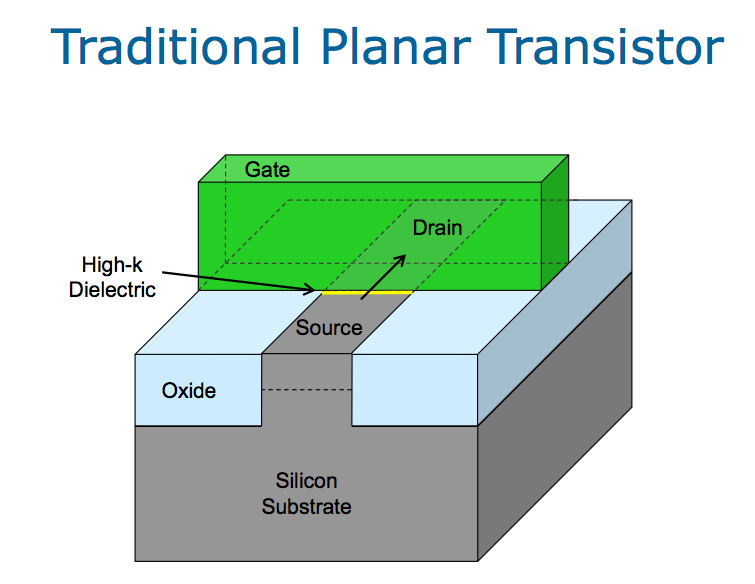
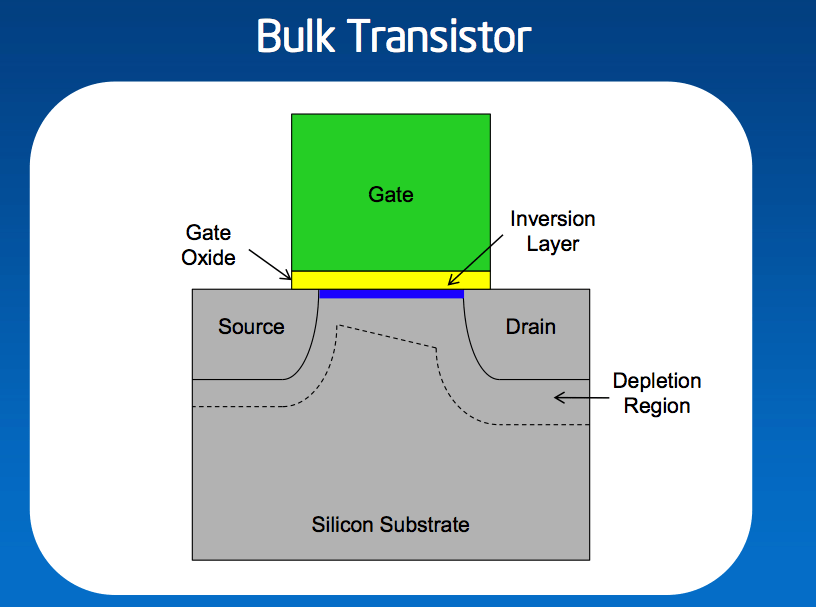
Starting from 22 nm and 16 nm technology nodes, the industry has gradually transitioned from planar transistors, to FinFET (Fin Field Effect) transistors or Tri-Gate Transistors. FinFET achieves faster switching speed and lower leakage at the same voltage. Obviously, compared to planar transistors, FinFET is more difficult to manufacture.
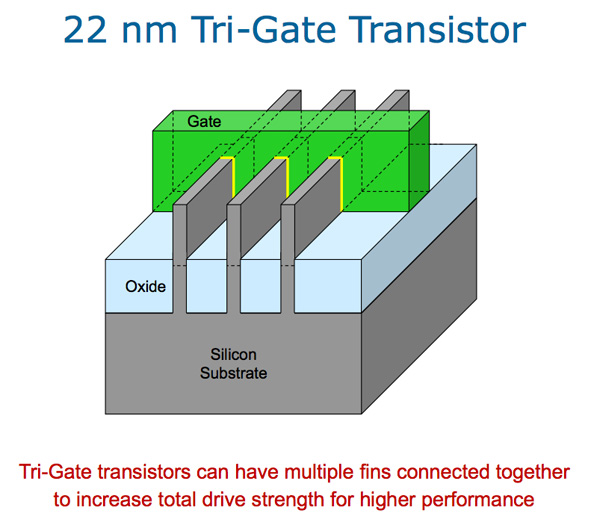
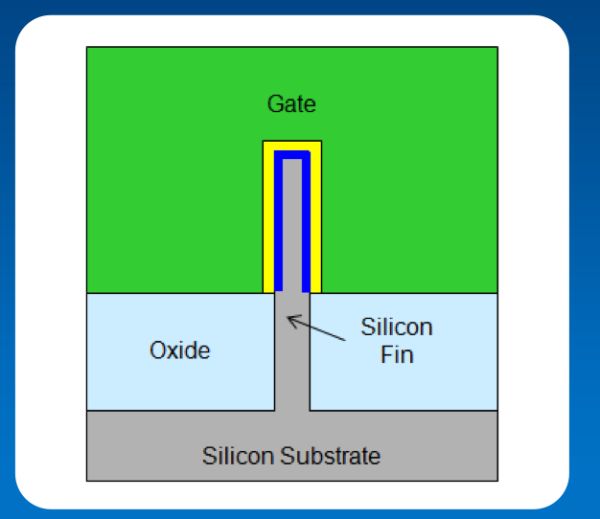
As the industry has advanced to 3 nm / 2 nm technology nodes, the transistors have again transitioned to NanoSheet transistors, also known as Gate-All-Around (GAA) transistors.
Compared to FinFET, NanoSheet Transistors have the following benefits:
- They have better gate control with Gate-All-Around structure, thus lower leakage and lower voltage
- They are easier to manufacture compared to very tall and thin Fins
- They can achieve better power-performance optimization due to better effective drive width granularity
The following YouTube video from SamSung illustrates the transistor evolution quite well. We recommend readers to watch this video to understand more.
Reference
 Chipress
Leave a comment